If there is one thing I would encourage every parent to do with their child, it is to read with them.
I have always believed that developing a love of reading is one of the greatest gifts we can give children. Books open up new worlds, introduce us to extraordinary characters, spark our imaginations and help us understand people and places beyond our own experiences.
And, of course, being able to read confidently is fundamental to almost everything children will go on to learn at school.
But when I talk about reading at home, I don’t mean sitting children down with endless worksheets or turning every bedtime story into a phonics lesson!
I mean enjoying books together, sharing stories, talking about characters and making reading a natural, pleasurable part of family life.
Parents sometimes worry that they aren’t doing enough to support their child’s reading, particularly when they see other children beginning to read independently.
My advice is always the same: don’t underestimate the value of simply spending time enjoying books with your child.
You don’t need to be a teacher, and you certainly don’t need to recreate the classroom at home.
A little time, plenty of encouragement and a genuine enjoyment of stories can make an enormous difference.
Why Is Reading at Home So Important?
We often think about reading in terms of learning to recognise letters, sound out words and eventually read fluently.
These are all essential skills, but reading is about so much more than that.
When you share a book with your child, you are helping them develop their vocabulary, imagination, listening skills and understanding of the world.
You are introducing them to new ideas, encouraging curiosity and helping them make sense of feelings and experiences.
Stories can also provide wonderful opportunities for conversation.
A character who is frightened, disappointed, excited or worried gives us a chance to talk about emotions in a way that feels natural and comfortable.
And sometimes, a story can help a child express something they might otherwise struggle to put into words.
But perhaps most importantly, reading together helps children associate books with pleasure.
Children who enjoy reading are far more likely to choose to read, and the more they read, the more confident and capable they become.
That is a wonderful cycle to encourage.
Learning to Read Starts Long Before School
One of the things I love about Early Years education is that so much important learning happens through ordinary, everyday experiences.
Reading is a perfect example.
Children begin developing the foundations for reading long before they can recognise a single letter.
Babies and Toddlers: It All Starts with Language
Babies learn about language by listening to the people around them.
Every conversation, nursery rhyme, song and shared story helps them begin to understand how language works.
Even very young babies enjoy looking at pictures, listening to familiar voices and exploring books.
They may want to chew the corners, turn several pages at once or spend five minutes looking at the same picture. That’s absolutely fine!
At this stage, the aim isn’t to teach them to read. It is to help them enjoy books, hear language and develop those all-important early communication skills.
As children grow, encourage them to point to pictures, name familiar objects and join in with repeated phrases.
You might be surprised by just how much they are learning.
Pre-School: Playing with Sounds
As children approach school age, they begin to develop a greater awareness of the sounds that make up words.
This is an important foundation for learning phonics.
And the good news is that there are lots of simple, enjoyable ways to help.
Sing nursery rhymes, play rhyming games, clap out the syllables in names and enjoy silly words together.
You might play ‘I Spy’ using sounds, or ask your child whether they can think of a word that rhymes with ‘cat’.
These activities help children tune into language without feeling as though they are being taught.
For me, that is exactly how early learning should be.
Reception and Key Stage 1: Learning Phonics
When children begin Reception, they are taught phonics, which helps them understand the relationship between letters and the sounds they represent.
They learn to blend sounds together to read words and to break words into individual sounds when spelling.
This is a very important stage in learning to read, and children need regular opportunities to practise.
However, it is worth remembering that children develop these skills at different rates.
Some will quickly begin blending sounds into words, while others need more time and repetition.
That doesn’t mean they won’t become successful readers.
What matters is that they receive good teaching, appropriate support and plenty of encouragement along the way.
Becoming a Confident, Fluent Reader
As children become more confident with phonics, reading gradually becomes more automatic.
Instead of concentrating on sounding out every word, they can begin to focus more fully on what they are reading.
And this is when the real magic happens!
They start to become absorbed in stories, develop favourite authors, discover books they simply cannot put down and begin reading for pleasure.
Of course, becoming a fluent reader takes time and practice, but it is important that we never lose sight of the enjoyment along the way.
How Can Parents Help at Home?
The wonderful thing about supporting reading at home is that it doesn’t have to be complicated.
In fact, some of the simplest things are often the most effective.
Read Together Every Day
If possible, try to make reading part of your daily routine.
It might be ten minutes before bed, a story after lunch or a quiet moment curled up on the sofa.
The important thing is that it becomes something you both look forward to.
I would much rather see a child enjoying ten minutes of reading every day than reluctantly sitting through a much longer session once a week.
And please don’t worry if your child wants to hear the same story over and over again!
Repetition is an important part of learning. Children enjoy the familiarity of favourite stories, and each time they hear them, they are developing their understanding of language and how stories work.
Keep Reading Aloud, Even When Your Child Can Read Independently
This is something I feel particularly strongly about.
Sometimes, once children begin reading for themselves, parents stop reading aloud to them.
I think that is such a shame.
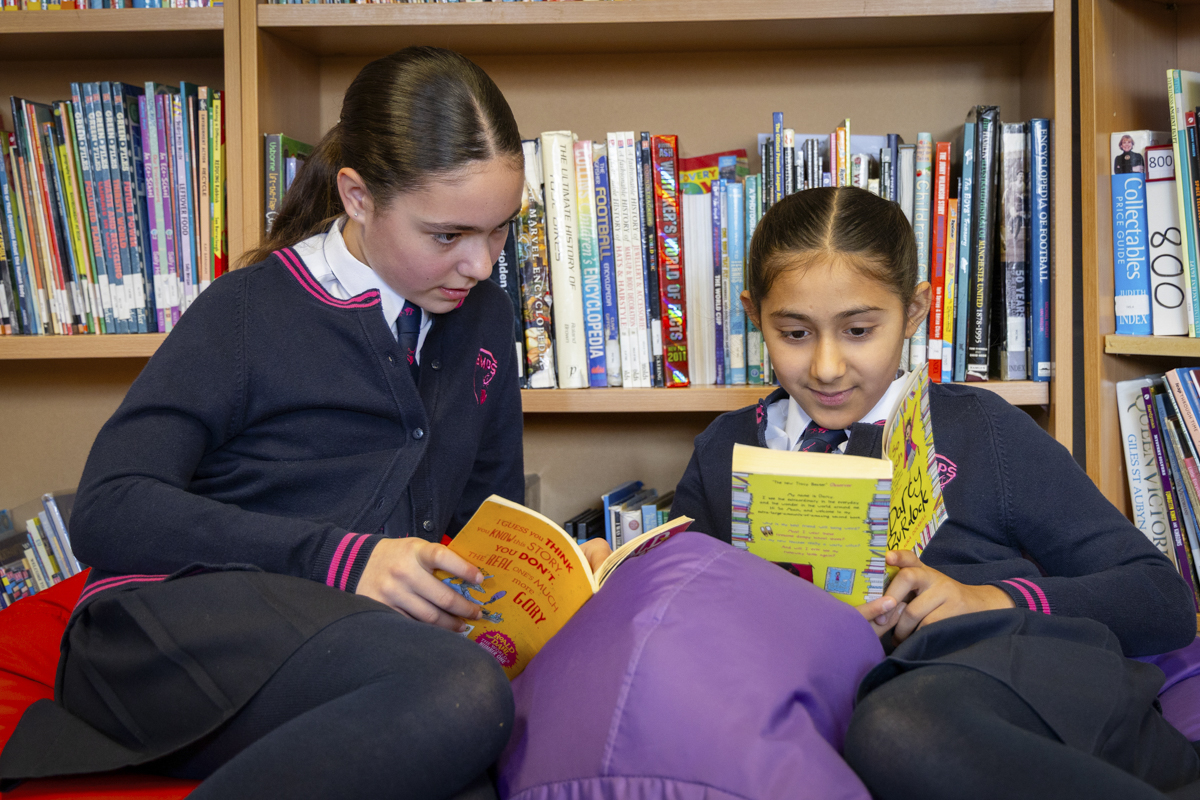
There is enormous value in continuing to share books with children, even when they are confident readers.
Reading aloud allows children to enjoy stories that may be beyond their current independent reading ability. It introduces more sophisticated vocabulary, develops comprehension and gives them opportunities to explore ideas and characters together with you.
And, of course, it is a lovely way to spend time together.
I would encourage parents to continue reading aloud for as long as their children enjoy it.
You are never too old to enjoy a good story!
Let Your Child Have a Go
When children are reading their school books, it can be tempting to jump in and tell them a word as soon as they hesitate.
Try to resist that temptation!
Give them a little time to work it out, encourage them to use the phonics they have learnt and praise their efforts.
You might say, “What sound does that letter make?” or “Can you blend those sounds together?”
If they are struggling, offer support rather than allowing them to become frustrated.
The aim is to help children develop confidence and independence, not to test them.
And remember to praise the effort they put in, not just whether they get every word right.
Talk About What You Read
Being able to read the words on a page is only part of becoming a good reader.
Understanding what those words mean is just as important.
One of the best ways to develop comprehension is simply to talk about books together.
You might ask:
- What do you think will happen next?
- Why do you think that character behaved like that?
- How do you think they are feeling?
- What would you have done?
- Which part of the story did you enjoy most?
These conversations help children think more deeply about what they are reading.
But try not to turn every story into a series of questions!
Sometimes it is enough to laugh together at something funny, talk about a favourite character or simply enjoy the story.
Make Reading Part of Everyday Life
Reading doesn’t only happen when we open a book.
There are opportunities to develop reading skills all around us.
Encourage your child to look at signs when you are out, help read a recipe when you are cooking or spot familiar words on food packaging.
Visit the library and allow them to choose books that interest them.
And don’t forget that children learn a great deal from watching us.
If they see adults reading books, magazines or newspapers for pleasure, they begin to understand that reading is something people choose to do because they enjoy it.
What If My Child Doesn’t Enjoy Reading?
This is something many parents worry about, and my first piece of advice would be not to panic.
Not every child develops a love of reading at the same time, and not every child enjoys the same types of books.
Some children are naturally drawn to stories, while others would much rather be outside playing football or building something.
The trick is often finding the right material to capture their interest.
A child who isn’t particularly interested in a traditional storybook might love a book about dinosaurs, space, animals or their favourite sport.
And remember, reading doesn’t always have to mean reading a novel.
Comics, joke books, magazines, fact books, poetry and graphic novels all have their place.
Audiobooks are also wonderful for developing vocabulary, listening skills and an enjoyment of stories, even though they don’t replace opportunities to practise reading printed words.
Sometimes taking turns to read, choosing a shorter book or allowing your child to read somewhere different can help.
Most importantly, try not to let reading become a battle.
If your child is tired, frustrated or reluctant, a short, positive experience is far better than a long, unhappy one.
We want children to associate reading with enjoyment and success, not pressure or failure.
If your child is consistently finding reading difficult, do talk to their teacher. There may be particular sounds or skills they need more help with, and working together will make it easier to provide the right support.
Reading and Confidence Go Hand in Hand
Learning to read is a huge achievement, but it isn’t always an easy journey.
Some children seem to pick it up quickly, while others need more time, practice and support.
One of the most important things we can do as adults is avoid comparing children with one another.
It can be difficult when your child tells you that a friend is reading a much harder book, or when you notice that a younger sibling seems to be progressing more quickly.
But children develop at different rates, and comparisons rarely help.
Instead, celebrate the progress your child is making.
Perhaps they have remembered a sound they previously found difficult, read a sentence without help or finished their first book independently.
These are all achievements worth celebrating.
I am a great believer in helping children recognise their own progress.
Rather than focusing on what they can’t yet do, encourage them to look at how far they have come.
A child who believes they are capable of learning is much more likely to persevere when things become difficult.
And that confidence will benefit them in every area of school life.
Reading at Broughton Manor Prep
At Broughton Manor Preparatory School, we place enormous importance on helping children become confident, capable readers who genuinely enjoy books.
Our approach begins in Nursery, where songs, rhymes, stories and conversations are part of everyday life.
As children move through Pre-School, they continue developing their communication and language skills, alongside the early foundations of phonics and literacy.
In Reception, children begin more structured phonics teaching, learning the skills they need to become independent readers and writers.
As they progress through the school, we build on these foundations, developing fluency, comprehension and an appreciation of a wide range of literature.
Our small classes allow teachers to know each child’s reading ability well and provide the encouragement, support or additional challenge they need.
But I believe that developing a love of reading is just as important as teaching the mechanics of reading.
We want children to be excited about books, to discover authors they love and to experience the pleasure of becoming completely absorbed in a story.
Our library story times, opportunities to share books and celebrations of reading all help to make books an important part of school life.
And, of course, we recognise the vital role that parents play.
Reading is one of those areas where the partnership between home and school can make an enormous difference.
We are always happy to offer advice, suggest suitable books or explain how parents can support the phonics and reading skills their children are learning in school.
Frequently Asked Questions
How long should I read with my child each day?
For younger children, ten to fifteen minutes a day is a good starting point, although there is no need to watch the clock! Regular, enjoyable reading is far more valuable than long sessions that become a chore.
Should I still read to my child once they can read independently?
Absolutely! Reading aloud introduces children to more challenging vocabulary, develops comprehension and allows them to enjoy books beyond their own reading level. It is also a lovely opportunity to spend time together.
How can I help my child with phonics at home?
The best starting point is to find out how phonics is taught at your child’s school so that you can reinforce the same approach. Encourage your child to use the sounds they know, blend them together and have a go at unfamiliar words. Try to use pure sounds, such as ‘mmm’ rather than ‘muh’, and keep practice short and positive.
What if my child finds reading difficult?
Talk to their teacher rather than waiting for the problem to resolve itself. Some children need additional time and practice, while others may benefit from more targeted support. The important thing is to identify difficulties early and work together to help your child make progress.
Should I correct my child every time they make a mistake?
Not necessarily. Give them time to notice and correct mistakes themselves, and offer support when needed. If a word is beyond their current knowledge, it is fine to help. The aim is to build accuracy and confidence without interrupting the enjoyment of reading.
A Final Thought
When I think about what I want children to gain from learning to read, it isn’t simply the ability to decode words on a page.
Of course, that is essential, but I want so much more for them.
I want them to experience the excitement of discovering a wonderful story, the pleasure of finding a favourite author and the satisfaction of being able to learn something new simply by opening a book.
I want them to develop the confidence to explore ideas, question what they read and use books to understand the world around them.
And I want reading to become something they choose to do, not just something they are expected to do.
Because teaching a child to read gives them an essential skill, but helping a child to love reading gives them something they can enjoy for the rest of their life.
So my advice to parents is simple: read together, talk together, enjoy stories and don’t worry too much about how quickly your child is progressing compared with anyone else.
The most important thing is to help them discover the joy of reading.
And what a wonderful gift that is.