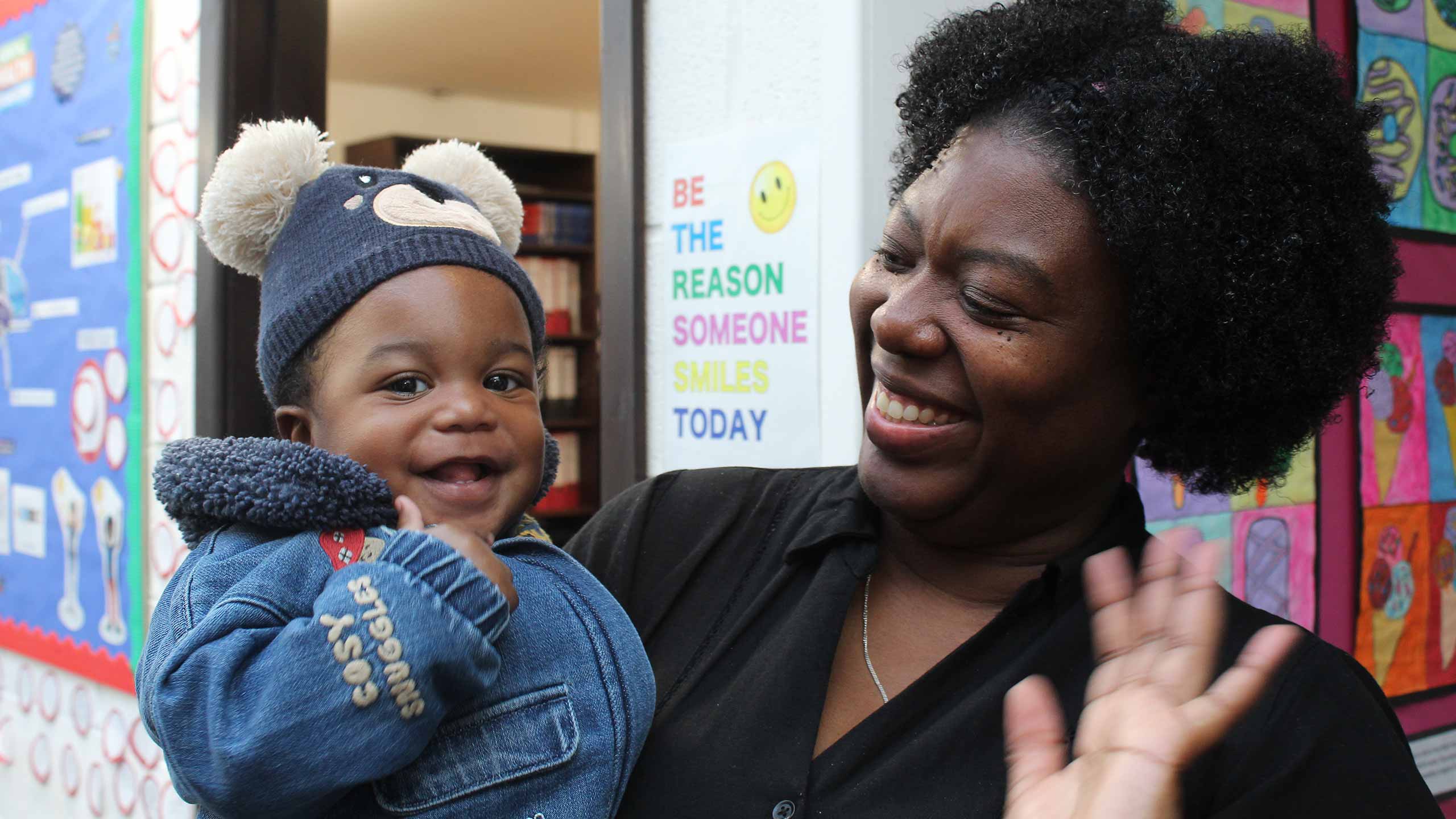
Leaving your baby at nursery for the first time is a big moment. For many parents, it is the first time they have entrusted their precious little one to someone outside their immediate family, and I don’t think we should ever underestimate just how emotional that can be.
There may be excitement about returning to work, relief at having found a nursery you feel happy with, and perhaps even a little anticipation about getting back into a familiar routine. But alongside all of that, there are often worries.
Will my baby be happy? Will someone notice when they are tired? Will they know how to comfort them when they are upset? Will they get enough cuddles? And, perhaps the question that sits behind all the others, will anyone really care for my baby in the way that I do?
These are all perfectly natural concerns.
Having spent much of my career working in Early Years education, including establishing and running my own nursery, I know just how important those first experiences of care outside the family are.
For me, a good nursery is not simply somewhere that looks after babies while their parents are at work. It is somewhere that builds loving, trusting relationships, provides a safe and stimulating environment and works in genuine partnership with families.
Getting that right makes an enormous difference, not only to a baby’s early experiences but also to how confident parents feel about leaving them.
When Is the Right Time for a Baby to Start Nursery?
This is a question I am often asked, and my answer is that there really isn’t one right age.
Every family is different, and the decision about when to start nursery is influenced by all sorts of things, including parental leave, work commitments, family circumstances and personal preferences.
Some babies start nursery when they are just a few months old, while others don’t begin until they are approaching their first birthday or even later.
What matters far more than the age at which they start is the quality of the care they receive and how carefully the transition is managed.
Babies thrive when they feel safe, secure and loved, and when the adults caring for them understand and respond to their individual needs.
A Few Things Worth Thinking About
If you are planning a return to work, I would encourage you to start looking at nurseries well in advance.
Baby rooms often have limited places, and finding the right setting can take time.
It is also worth thinking about how you will manage the settling-in period. If possible, allow yourself some flexibility before returning to work so that you and your baby can get used to the new routine without feeling rushed.
You may also be eligible for funded childcare. In England, eligible working parents can access up to 30 hours of funded childcare per week, during term time, from the age of nine months. It is worth checking the current eligibility criteria and how funding works at your chosen nursery.
But above all, I would encourage parents not to feel pressured into thinking there is a perfect age to start.
The right time is the time that works for your family, with a nursery that you trust to care for your baby.
What Should You Look for in a Baby Room?
When visiting a nursery, it is very easy to be impressed by beautiful rooms, lovely resources and attractive outdoor spaces.
All of these things are important, of course, but I would encourage parents to look beyond the environment.
Watch the adults.
How do they interact with the babies? Do they get down on the floor with them? Do they talk to them, smile at them and respond when they make a sound or reach out?
Are babies being cuddled and comforted? Do the staff seem relaxed, warm and genuinely interested in the children?
For me, these are some of the most important things to notice.
Relationships Come First
Babies need to develop close, trusting relationships with the adults who care for them.
In nursery, every child has a designated key person whose role is to build a strong relationship with the baby and their family.
This is so much more than simply allocating a member of staff to a child.
A good key person gets to know the little things that make each baby unique.
They learn how they like to be held, what makes them smile, how they show that they are tired or hungry, and what helps them settle when they are upset.
They begin to recognise the difference between a cry that means “I’m tired” and one that means “I need a cuddle”.
And importantly, they build a relationship with parents too.
After all, nobody knows a baby better than their parents, and sharing that knowledge is essential.
I would always encourage parents to ask how the key person system works and what happens when their baby’s key person is absent. Babies benefit enormously from consistency and familiar faces.
A Calm, Safe and Welcoming Environment
A good baby room should feel warm, welcoming and calm, with plenty of opportunities for babies to explore safely.
Babies learn through their senses and through movement, so they need space to roll, stretch, crawl, reach and eventually pull themselves up and take those exciting first steps.
Resources don’t have to be complicated or expensive.
A basket of interesting objects, a mirror at floor level, different textures to explore or a simple game of peekaboo can provide wonderful learning opportunities.
I have always believed that some of the best Early Years experiences are often the simplest.
What matters is that the environment is thoughtfully organised, appropriately supervised and responsive to the needs and interests of the babies using it.
For children under two, the usual staffing requirement in England is at least one member of staff for every three children. However, ratios are only one part of the picture. I would encourage parents to look at how staff are deployed, how babies are supervised and how individual needs are met throughout the day.
Sleep, Feeding and Everyday Routines
One of the things that can worry parents most is whether their baby’s routine will be followed at nursery.
Perhaps your baby has a very particular way of falling asleep, prefers their milk at certain times or is just beginning the exciting, and sometimes messy, journey of weaning.
A good nursery should work closely with you to understand these routines and provide as much consistency as possible between home and nursery.
Babies are individuals, and their needs change quickly.
Some will need several naps during the day, while others may be moving towards a different sleep pattern. Some will be confidently exploring new foods, while others will still be taking their time.
Nursery practitioners should be able to respond to these differences while following clear procedures for safe sleep, feeding, allergies and hygiene.
Don’t be afraid to ask questions about where and how babies sleep, how often they are checked, how bottles and breast milk are stored and prepared, and how staff support weaning.
These are important questions, and a good nursery should welcome them.
The Importance of Fresh Air
I am a great believer in children spending time outdoors, and that includes our very youngest babies.
Fresh air, natural light and the opportunity to experience the world outside are valuable from the earliest months.
For a young baby, this might mean lying safely on a blanket watching leaves move in the breeze, listening to birdsong or feeling different textures.
For a crawling baby, it might involve exploring the grass, investigating natural objects or watching older children at play.
As they grow, these experiences become increasingly adventurous.
The outdoors provides wonderful opportunities for sensory exploration, physical development and curiosity, and I believe it should be a regular part of nursery life.
Helping Your Baby Settle into Nursery
I think it is important to acknowledge that starting nursery is a transition for parents just as much as it is for babies.
And sometimes, if we are being completely truthful, it is the parents who find it hardest!
That is perfectly understandable.
You have spent months getting to know your baby, responding to their every need and developing your own routines together. Handing over that responsibility to someone else is a significant step.
The good news is that a carefully planned settling-in process can make an enormous difference.
Take Your Time
I would always encourage a gradual introduction to nursery wherever possible.
Initially, this may involve spending time in the baby room together, allowing your baby to explore while you talk to the staff and share information about their routines.
As your baby becomes more familiar with the environment and the adults, you can begin leaving them for short periods, gradually increasing the time as they settle.
There isn’t a set formula that works for every baby.
Some settle very quickly, while others need more time and reassurance.
The important thing is to follow the baby’s lead rather than expecting every child to settle in exactly the same way.
Share the Little Details
One of the best things parents can do is tell nursery staff as much as possible about their baby.
What makes them laugh? Do they have a favourite song? How do you know when they are getting tired? Do they like being rocked or held in a particular way?
Sometimes it is the smallest piece of information that helps a practitioner comfort a baby or make them feel more secure.
And please don’t worry about sharing too much. Good Early Years practitioners understand how valuable this information is.
Comforts from Home
Familiar objects can sometimes help babies feel more secure in a new environment.
A favourite comforter or familiar toy may provide reassurance during the day, although nurseries will need to follow safe sleep guidance about which items can be used during naps.
It is always worth discussing this with your baby’s key person.
Saying Goodbye
This can be one of the hardest parts of the day, particularly in the early weeks.
My advice would be to establish a calm, predictable goodbye routine.
Give your baby a cuddle, say goodbye warmly and allow their key person to take over.
It can be tempting to linger, especially if your baby becomes upset, but a consistent routine often helps them understand what to expect.
And if there are tears, try not to panic.
Some babies settle quickly once they are comforted and engaged, while others need more time. What matters is that staff respond sensitively and keep you informed.
Remember That Parents Need Reassurance Too
I think this is something nurseries should never forget.
Parents need to feel confident that their baby is happy, safe and being well cared for.
A little update during the day, a photograph of a happy moment or a conversation at collection time can make a huge difference.
Good communication helps build trust, and trust is at the heart of a successful relationship between parents and nursery staff.
What Will My Baby Actually Learn at Nursery?
This is one of my favourite questions because the answer is: so much more than you might imagine!
People sometimes think that babies are too young to be learning in any meaningful way, but nothing could be further from the truth.
Babies are learning from the moment they are born.
Every interaction, every sound, every movement and every new experience contributes to their development.
And the wonderful thing is that, for babies, learning doesn’t need to look like a lesson.
Communication and Language
When a practitioner talks to a baby while changing their nappy, sings a nursery rhyme or responds to their babbling, they are helping to develop early communication skills.
Babies learn that sounds have meaning, that communication is a two-way process and that their attempts to interact with others are important.
These early experiences lay the foundations for language development.
Physical Development
Reaching for a toy, rolling over, crawling towards something interesting or pulling themselves up to stand are all important achievements.
A well-planned nursery environment gives babies opportunities to practise these skills naturally, at their own pace.
Personal, Social and Emotional Development
Perhaps most importantly, babies are learning about relationships.
They are discovering that adults respond when they need help, that familiar people can be trusted and that the world is a safe and interesting place to explore.
As they grow, they begin to notice other children, show interest in what they are doing and gradually develop the foundations of social interaction.
These three areas, communication and language, physical development, and personal, social and emotional development, are the prime areas of the Early Years Foundation Stage.
They underpin so much of what children will learn as they grow.
And this is why I feel so strongly that high-quality care and high-quality education in the Early Years are not two separate things.
For babies, the care they receive is an essential part of their learning.
A cuddle, a conversation during a nappy change, a shared smile or a game on the floor may seem like an ordinary moment, but each one is an opportunity to build relationships, confidence and understanding.
Babies at Broughton Manor Nursery
At Broughton Manor Nursery in Milton Keynes, we welcome babies from just two months old.
We understand what a significant decision it is to entrust your baby to a nursery, and we want families to feel reassured, supported and confident from the very beginning.
Our purpose-built nursery provides age-appropriate environments designed to be welcoming, comfortable and stimulating, with opportunities for babies to explore, develop and learn through play.
We place great importance on getting to know each baby as an individual and building strong relationships with their families.
Our key person approach helps us understand each child’s routines, preferences, personality and changing needs, while regular communication with parents ensures that we are working together.
We are also fortunate to have wonderful outdoor spaces, including a large lawn and our spinney, where children can experience nature and enjoy fresh air as they grow.
One of the benefits of being part of Broughton Manor Preparatory School is the continuity we can offer families.
Children can begin their journey with us as babies, move through Nursery and Pre-School and then continue into Reception and the main school, right through to Year 6.
As they grow, they become increasingly familiar with the school environment, the routines and the people around them.
But for our youngest children, our focus is very much on the here and now.
We want them to feel safe, happy, loved and secure, with the freedom to explore their surroundings and develop at their own pace.
Because those early experiences matter enormously.
Frequently Asked Questions
What is the youngest age a baby can start nursery?
This varies between nurseries. Some accept babies from around three months old, while others have a higher minimum age. At Broughton Manor Nursery, we welcome babies from two months old.
How long does it take a baby to settle into nursery?
Every baby is different. Some settle within a few days, while others may take several weeks or longer to feel completely comfortable. A gradual settling-in process, familiar adults and close communication with parents all help.
What is the staff-to-child ratio for babies?
In England, the usual minimum requirement for children under two is one member of staff for every three children. Nurseries must also ensure that staffing arrangements meet children’s individual needs and keep them safe.
What should I pack for my baby’s first day?
Your nursery will provide a list, but you will usually need nappies, wipes, spare clothes, any milk or bottles required and other items specific to your baby’s routine. It is a good idea to label everything clearly!
Can I receive funded childcare for my baby?
Eligible working parents in England can access up to 30 hours of funded childcare per week, for 38 weeks of the year, from the age of nine months. Eligibility and the way funding is offered can vary, so it is worth checking the current arrangements before applying.
What if my baby cries when I leave?
It is not unusual for babies to become upset during the settling-in period, particularly as they develop a stronger awareness of separation.
The important thing is that they are comforted by familiar, responsive adults and given the time they need to feel secure. Good nursery staff will work closely with you and keep you informed about how your baby is settling.
A Final Thought
When I think about what matters most in a nursery for babies, I don’t immediately think about the resources, the equipment or even the activities on offer.
I think about the relationships.
I think about the baby who reaches out to their key person for a cuddle, the practitioner who recognises that a little one is tired before they begin to cry, and the parent who walks away in the morning feeling reassured that their baby is in safe, caring hands.
These may seem like small things, but they are the foundations of everything that follows.
Babies don’t need elaborate activities or constant entertainment. They need love, attention, security, opportunities to explore and adults who genuinely delight in their achievements.
And those achievements are extraordinary.
The first smile for a familiar practitioner, the determination to reach a favourite toy, the excitement of pulling themselves up to stand or the joy of taking those first wobbly steps.
It is an enormous privilege to share these moments with families.
I have always believed that the earliest years of a child’s life are some of the most important. We have a wonderful opportunity to help shape how children see themselves, how they relate to others and how confidently they approach the world around them.
Getting those foundations right is something that matters deeply to me.
Because every child deserves the very best start in life, and every parent deserves to know that their baby is being cared for with the same warmth, patience and attention that they would wish for themselves.